Become a Tahoe Keeper.
Clean. Drain. Dry.
Help protect Lake Tahoe from golden mussels: Learn how to Clean, Drain, Dry all your gear, from kayaks and paddleboards to waders and inflatables. Scroll down to become a Tahoe Keeper today!

Becoming a Tahoe Keeper is easy and free.
Here's what to do:
- Watch the video.
- Take the quiz.
- Once you have passed the quiz, register.
- Opt-in for a chance to win cool gear.
- Pick up your decal from the TRPA office, Tahoe Science Center, or any watercraft inspection station
BONUS: Go paddle on the Lake Tahoe Water Trail.
Follow @TahoeKeepers on social and tag us in your #CleanDrainDry adventures!
Tahoe Keeper (noun)
- Responsible and informed paddlers who understand how to Clean, Drain, and Dry their watercraft and gear before and after launching in Tahoe regional waterbodies.
- Kayakers, paddleboarders, canoeists, anglers, and beachgoers committed to protecting Lake Tahoe’s pristine watershed from the devastating effects of aquatic invasive species (AIS).
Heading to Fallen Leaf or Echo Lakes? Stop here first.
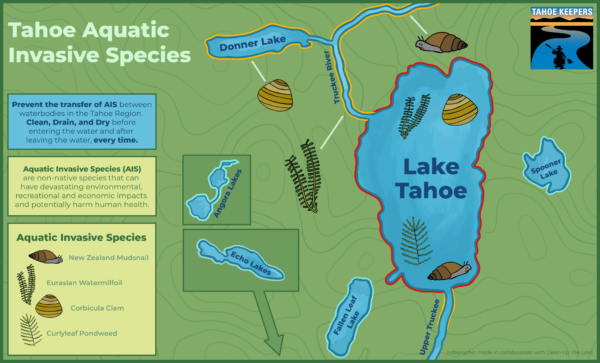 Note: If you recently launched in another waterbody, including Lake Tahoe, stop by an inspection station on your way to Fallen Leaf, Echo, Angora, and Spooner Lakes. Inspection and decontamination is free for hand-launched non-motorized watercraft. Staff at Fallen Leaf and Echo Lake may ask for a decontamination receipt prior to launch.
eFoil? eSUP? eWake? Click here.
Become a Tahoe Keeper. Clean. Drain. Dry.
It is easy and free
- Watch the video.
- Take the quiz.
- Once you have passed the quiz, register.
- Enter for a chance to win cool gear. Be sure to click “opt-in!”
- Pick up your decal from the TRPA office, Tahoe Science Center, or any watercraft inspection station
Bonus: Paddle on the Lake Tahoe Water Trail.
¿Hispanohablante? Participar en español aqui!
Stop Golden Mussels.
Invasive golden mussels, discovered nearby in the Sacramento-San Joaquin Delta, pose the greatest known AIS threat to Lake Tahoe. These invaders litter beaches with sharp shells and destroy native fish populations, and if introduced, would irreversibly harm Lake Tahoe’s recreation, water quality, and ecosystem.
Help protect Lake Tahoe from golden mussels: Clean, Drain, Dry your gear.
Been in infested waters lately? Get a free decontamination at any Lake Tahoe watercraft inspection station.
Why do we Clean, Drain and Dry?
Invasive species are spread through the transport of water and debris that can collect inside and on watercraft and gear. Non-motorized watercraft, such as kayaks and paddleboards, pose a threat of spreading aquatic invasive species (AIS). The threat has increased with the popularity of inflatable watercraft and easily transportable gear. Fallen Leaf Lake, Echo Lakes, Angora Lakes, Spooner Lake, and most of the smaller lakes, streams, and rivers in the Tahoe Region do not have some of the invasive species present in Lake Tahoe. It’s up to us to keep it that way!
Heading to Fallen Leaf or Echo Lakes? Stop here first.
eFoil? eSUP? eWake? Click here.
Hand-launched watercraft with electric motors like eFoils, eSUPs, and electric surfboards are required to be inspected every calendar year and display their sticker on their vessel. Individuals with hand-launched electric watercraft are encouraged to register as Tahoe Keepers to learn how to Clean, Drain, and Dry their watercraft.

Clean all equipment that touches water. Use a brush or a towel to dislodge material that could harbor AIS. Dispose of any plants, mud, and sand in the trash.

Drain water from your craft and gear. Be sure to drain all hatches, cockpits, paddles, buckets, and storage bags. Even one drop of water can contain AIS.

Dry all areas with a towel. Sunshine and dry-time helps to kill AIS. After properly Cleaning and Draining, 7 days of Dry time significantly reduces the risk of spreading AIS.
Why do we Clean, Drain and Dry?
Invasive species are spread through the transport of water and debris that can collect inside and on watercraft and gear. Non-motorized watercraft, such as kayaks and paddleboards, pose a threat of spreading aquatic invasive species (AIS). The threat has increased with the popularity of inflatable watercraft and easily transportable gear. Fallen Leaf Lake, Echo Lakes, Angora Lakes, Spooner Lake, and most of the smaller lakes, streams, and rivers in the Tahoe Region do not have some of the invasive species present in Lake Tahoe. It’s up to us to keep it that way!
CD3: A Clean, Drain, Dry Machine
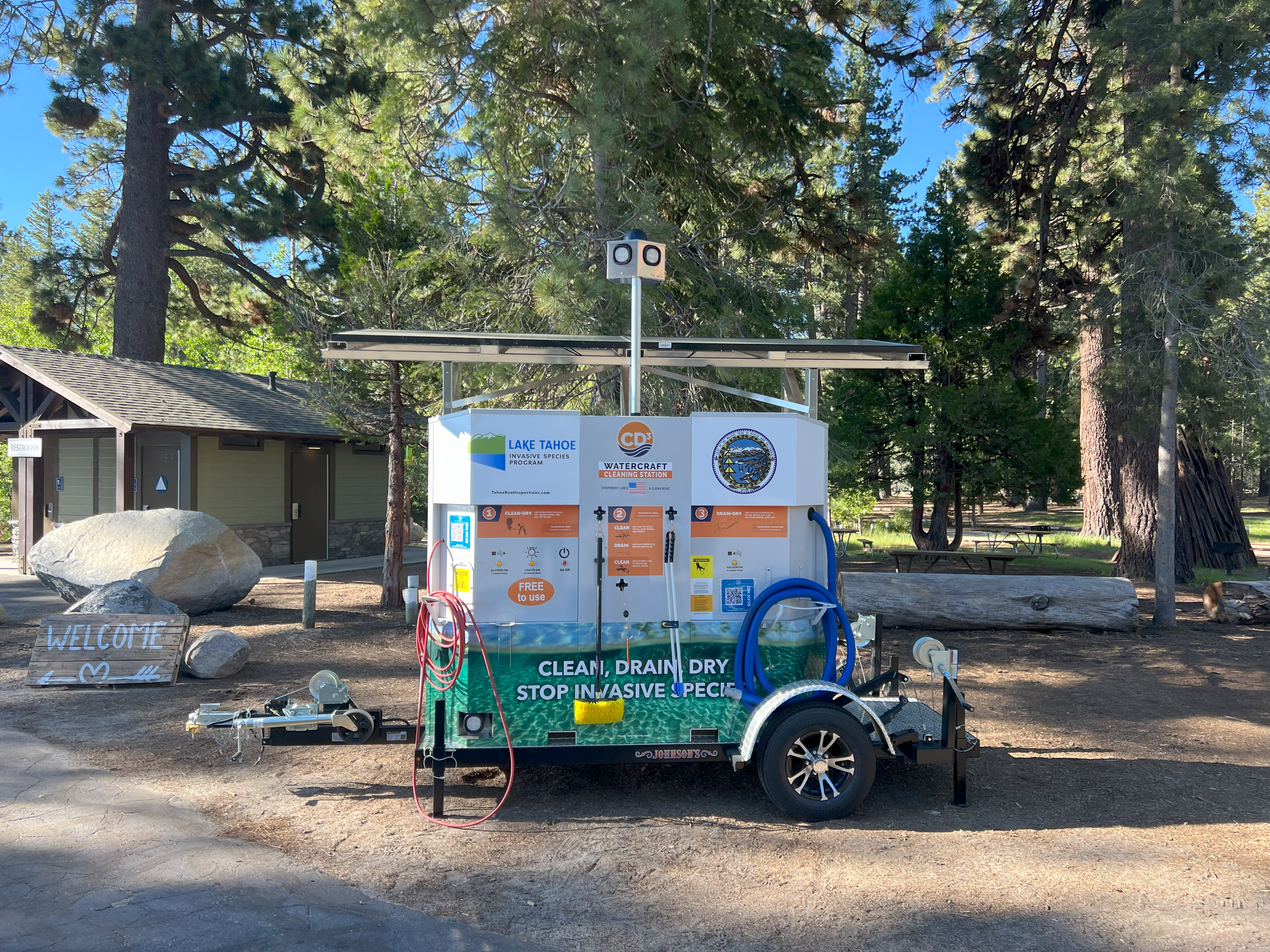

Find a CD3 Machine!
Love our Tahoe Keepers Community?
Check out more ways to get involved with AIS prevention and the Lake Tahoe recreation community
Paddle routes, rentals, and launch locations
Lake Tahoe Water Trail
The Lake Tahoe Water Trail is a 72-mile water route along the shoreline that connects launch and landing sites that include restrooms, wayfinding signage, parking, transit, and trash cans. Paddlers can plan their safe, fun, and eco-friendly paddle trip on the website that includes mapped paddle routes, water safety, Tahoe Boating app, wind and weather conditions, Tahoe paddle outfitters, and videos to become a Tahoe Keeper and how to Clean, Drain, and Dry your paddle gear.
Download the Tahoe Boating app
Learn to identify invasive species
Eyes on the Lake
Become a Community Scientist! Attend an Eyes on the Lake training, hosted by Keep Tahoe Blue. Through this volunteer citizen science program, you can help prevent the spread of aquatic invasive plants in the Lake Tahoe region. Learn how to identify aquatic invasive plants, report your findings, and protect where you play!
Experience an interactive exhibit
Can’t visit in person? Experience the exhibit remotely at https://ais-831263.webflow.io/